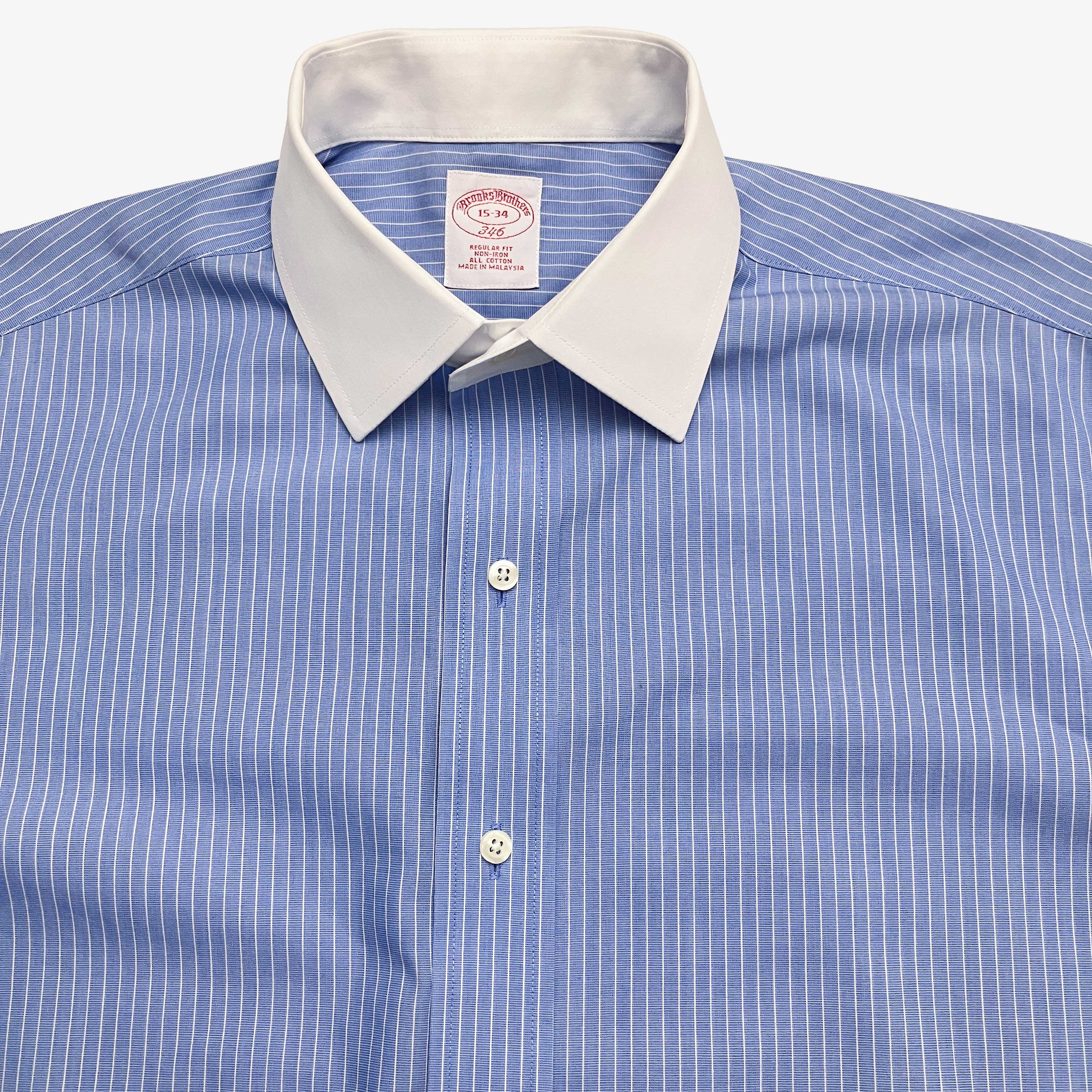
When looking for a pre-owned Brooks Brothers shirt, you may find the words “Non-Iron” on the label or in the product name. It is an appealing feature for anyone who wants to reduce ironing.
Non-Iron describes wrinkle-resistant treatment. It is different from a fibre name such as Cotton or Supima, and from a weave such as Oxford. When buying pre-owned, separate what the label says the shirt was made to do from the condition of that particular shirt today.
Non-Iron is a finish that helps cotton resist wrinkles
Brooks Brothers Japan describes these shirts as cotton shirts treated to retain fewer wrinkles after home laundering. The finish can reduce the work needed to make a shirt presentable, but it does not determine its thickness, softness, collar shape or fit. Brooks Brothers Japan: Non-Iron
Do not treat all Non-Iron shirts as having one feel. Check the fibre content, weave and fit as well.
How was Brooks Brothers involved in making Non-Iron shirts?
Brooks Brothers has sold Non-Iron shirts under its own name for many years. Its Japanese history page records the 1998 introduction of the 100% cotton BrooksEase Non-Iron shirt, separately from the blended wash-and-wear products introduced in 1953. Brooks Brothers Japan: company history
Launching a branded product is not the same as inventing every process or making every shirt in a company-owned factory. Manufacturer TAL Apparel says it developed PuckerFree seam technology in 1993 and SofTAL for 100% cotton wrinkle-resistant shirts in 1998. Fabric wrinkle resistance and keeping seams flat are related but distinct technologies. TAL: finishing technologies
A 2017 company profile published by the Ethiopian Investment Commission names Brooks Brothers among TAL's customers. The available sources do not prove that Brooks Brothers alone invented the treatment or that every Brooks Brothers Non-Iron shirt was made by TAL. Brand history, a manufacturer's technology and the factory that made an individual shirt should be considered separately. 2017 TAL company profile, p.15
Non-Iron does not necessarily mean synthetic fibre
Non-Iron alone does not reveal the fibres or their percentages. Brooks Brothers explains the development from early cotton-polyester wash-and-wear products to later 100% cotton Non-Iron shirts, while some current products add stretch.
For example, current Japanese product 100228173 is 95% cotton and 5% polyurethane Oxford. This is one product, not the composition of every older Non-Iron shirt. Supima describes the cotton raw material; Non-Iron describes the treatment. Both can appear on the same shirt. Brooks Brothers Japan product 100228173
Does it mean you never use an iron?
Non-Iron is intended to reduce care, not to guarantee that every wrinkle disappears under every washing and storage condition. The current product above advises low heat if ironing is needed, avoiding heavy pressure and not ironing while wet.
The finish you expect also depends on use and preference. A daily work shirt and a shirt whose collar and cuffs must look sharply pressed may call for different care.
For pre-owned shirts, the label cannot tell you how much performance remains
A Non-Iron label tells you how the shirt was sold, but not how much wrinkle resistance remains today. With pre-owned clothing, its history of washing, drying and wear may be unknown. Wrinkles in a photograph may also be folding creases rather than evidence that the finish has disappeared.
Among the pre-owned shirts handled by our store, some bearing a Non-Iron label have wrinkles that remain difficult to remove even with an iron. When we find this, we state it in the product description. The wrinkle alone does not prove that the finish has failed or caused it, so we do not try to force it out with excessive heat.
Check three kinds of information and the shirt itself
First check the Non-Iron wording on the label or in information tied to the product number. Next read the fibre composition and care label. Treatment, fibre percentages and care instructions are separate information.
Finally inspect the collar and cuffs for wear or stains, and check buttons and thinning fabric. Wrinkle resistance and overall condition are different. Ask before buying if the photographs and description do not show an area clearly.
Use the care label on that particular shirt
Do not apply instructions for a current shirt to an older shirt with a different age and composition. Washing, tumble drying and ironing temperatures should follow the care label on the individual garment.
Brooks Brothers Thailand advises prompt removal after low-temperature tumble drying and low heat only when needed, but regional guidance cannot replace the label on your shirt. Brooks Brothers Thailand: Non-Iron care
For people who want less work in daily care
Non-Iron can be a useful choice for people who wear shirts often and want to spend less time preparing them after washing. Then choose the weave, fit and collar you prefer; for a pre-owned shirt, also check its present condition and measurements.
A short term on a label becomes more useful when it is read separately from material and condition. That helps connect the convenience you expect with the decision to choose one particular shirt.